

Understanding Trans Epidermal Water Loss (TEWL) or how your skin loses moisture and how we slow it down
You use the heavily promoted miracle on holidays moisture creams from the Chemist, moisturising faithfully. Morning and night, without fail. And yet by the time the day winds down, your skin still feels tight, thirsty and somehow uncomfortable in its own right.
You’re not imagining it. And you’re certainly not doing it wrong.
For a great many of us, particularly as the years gather, the trouble isn’t only that our skin is short on moisture. It’s that our skin is letting that moisture slip away faster than it can hold on to it.
There’s a name for this quiet little vanishing act: Trans Epidermal Water Loss, or TEWL for short.
It sounds far more complicated than it is. And once you understand it, it rather changes the way you care for your skin.
What Is Trans Epidermal Water Loss?
Your skin is not simply a wrapping. It’s a clever, hard-working barrier, built to keep the good things in and the harmful things out.
Its outermost layer, the stratum corneum, is often described as a brick wall. The skin cells are the bricks, and the skin’s own natural lipids (the fats that sit between them) are the mortar holding everything snugly in place.
One of this wall’s most important jobs is keeping water from escaping.
A little always does. Every day, tiny amounts of water evaporate from the skin into the surrounding air, and that is perfectly normal. But when the wall is worn or weakened, the mortar crumbling here and there, that water starts to escape far more quickly than it should.
That faster-than-usual escape is what we call Trans Epidermal Water Loss.
You tend to feel it before you understand it. A tightness just after cleansing. A dryness that lingers, no matter what you reach for. Rough or flaky little patches. Skin that has turned more sensitive, quicker to react to things it once took in its stride. The odd bout of itching. Fine lines looking a touch more etched than they did. Or simply a face that never quite settles into feeling comfortable.
Why Does TEWL Increase As We Age?
A few things can wear that barrier down over time.
Natural Ageing
As the years pass, our skin makes fewer of the oils and lipids that keep the barrier strong. It grows thinner, drier and a little less able to hold on to what it has.
Harsh Stripping Cleansers, exfoliants and water based “nothing” creams
Most conventional products lean on strong synthetic detergents to strip away dirt and oil. Trouble is, they don’t stop at the oil you’d happily lose. They take the skin’s own protective lipids along with them. Hint: our super gentle facial cleansing bars and soaps don’t.
Environmental Exposure
Wind, indoor heating, air conditioning, cold snaps and sun all coax moisture out of the skin faster than it can be replaced. Tasmanian winters are especially good at it.
Over-Exfoliation
More is not always better. Scrub too often or too hard, and you disturb the very barrier you’re trying to polish, leaving it exposed and parched.
Hint: our enzyme peel and glow is super gentle and effective and doesn’t do this.
Stress
Emerging research suggests that ongoing stress can undermine the barrier’s function and slow its recovery. Given how much modern life asks of us, it’s little wonder so many of us notice our skin changing during the busiest, most frazzled stretches.
The Difference Between Hydration and Moisturising
Here is where skincare tends to tie itself in knots.
Hydration means adding water to the skin.
Moisturising means helping the skin hold on to that water.
You can lavish your face with every hydrating serum under the sun, but if the barrier isn’t doing its job, that lovely moisture simply drifts off into the air.
It’s rather like pouring water into a bucket with holes in the bottom. No amount of topping up will keep it full. You have to mend the bucket.
How our unique Traditional Beeswax Creams Help
Long before the shelves grew crowded with complicated ingredients and clever-sounding buzzwords, cold creams first formulated, 2000 years ago worked on one beautifully simple idea.
Look after the barrier.
Did you know?
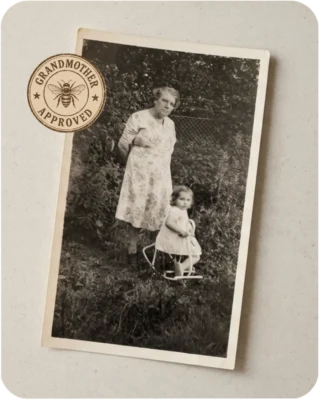
Your grandmother almost certainly kept a little pot of this kind of beeswax cold cream on her dressing table, long before the shelves filled up with water-light lotions that seem to vanish by lunchtime. A dab did the job. It kept happily through every season, and more often than not it was whipped up at the kitchen table from a handful of honest ingredients. Some old ideas stick around for the loveliest reason of all. They work.
At Beauty and the Bees, our beeswax creams are almost identical to those rich super effective time-honoured formulations, the ones that set out to support the skin rather than do battle with it.
Beeswax Helps Form a Breathable Protective Layer
Unlike petroleum-based synthetic occlusives that seal the skin flat, beeswax lays down a light, protective veil.
It helps slow the evaporation of water while still letting the skin breathe and behave as it was meant to, keeping it soft and comfortable.
Think of it as tucking your skin under a soft cashmere blanket, rather than wrapping it in plastic.
Rich Plant Oils Replenish Lipids
Our creams are rich in nourishing botanical oils, chosen because they get along so well with skin.
They help top up the mortar between those brick-like cells, shoring up the barrier that keeps your hard-won moisture exactly where it belongs.
Honey Helps Attract Moisture
Leatherwood honey, gathered from the beekeepers who have worked Tasmania’s wild rainforests for over a century, is a natural humectant. That simply means it draws moisture towards the skin.
Paired with a protector like beeswax, it makes rather a lovely partnership: honey coaxing moisture in, beeswax helping to keep it there.
Less Can Be More
So many modern moisturisers are mostly water, which is why they need long lists of preservatives and a fresh application every few hours.
Ours are concentrated, with very little water in them at all.
A little goes a remarkably long way (your jar will keep you company for months), and you can customise the texture to your liking with a mist, softer in summer, richer in winter. Buy better, buy less, as we’ve always said.
Is Your Skin Trying to Tell You Something?
If your skin often feels dry however diligently you moisturise, tight after cleansing, touchy about products it once wore happily, quicker to react than it used to be, or simply out of sorts, it may be asking for support rather than something stronger.
Sometimes the answer isn’t another active ingredient promising the world.
Sometimes it’s gently helping your skin do the very thing it was designed to do all along.
Caring for Your Skin Barrier
Looking after a tired barrier needn’t be a production. A few small, kind habits go a long way:
- Cleanse gently, and give the harsh detergents a miss.
- Reach for lukewarm water rather than piping hot.
- Ease off the harsh exfoliating products.
- Shield your skin from the worst of the weather and the artificial heating and cooling with our rich creams.
- Smooth your moisturiser on while your skin is still slightly damp (this one small trick makes a real difference).
- Choose products like ours that support the barrier rather than strip it bare.
The Comfort of Well-Nourished Skin
There’s a particular kind of contentment that arrives when skin feels comfortable again.
Not greasy, tight or shiny.
Just soft, supple and Comfortable all day long (often with just one application).
At Beauty and the Bees, we’ve always felt that skincare should offer more than a good result on the surface. It should bring comfort, nourishment, and that reassuring sense that you are being properly looked after, with.
Like the satisfied feeling after a nice big bowl of well-made chicken soup.
Because now and then, the most sophisticated thing you can do is simply help your skin remember how to be skin.
A Cream With a Long Memory
There’s a little of that same thinking in every jar we make.
Our founder Jill grew up at her grandmother Ada Norman’s elbow, watching creams come together at the kitchen table. Ada had learned during the First World War just how kind calendula could be to sore, damaged skin, and she loved that cheerful golden flower so well that she kept it growing in her garden for the rest of her days.
All these years later, Tasmanian grown calendula is the signature herb in our moisture creams (some habits are worth keeping). It’s a longer story that you can read about here.
If Your Skin Is Feeling the Effects
If your skin has been losing moisture faster than it can hold on, a proper beeswax cream makes a very good friend.
Our Leatherwood Honey & Coconut Light, Honey & Macadamia Rich and Honey & Olive Ultra Rich Face & Multi-Use Moisture Creams are all made by hand here in Tasmania, formulated to help slow that loss and leave your skin soft, calm and comfortable. Because they’re concentrated rather than watered down, a little goes a long way, and you can customise the texture with a mist of rosewater to suit your skin and the season.
Explore Our Face & Multi-Use Moisture Creams
-

Leatherwood Honey & Coconut Light Face & Multi-Use Moisture Cream
Price range: $7.30 through $57.70Select options This product has multiple variants. The options may be chosen on the product page -
Leatherwood Honey & Macadamia Rich Face & Multi-Use Moisture Cream
Price range: $7.30 through $57.70Select options This product has multiple variants. The options may be chosen on the product page -
Leatherwood Honey & Olive Ultra Rich Face & Multi-Use Moisture Cream
Price range: $7.30 through $193.60Select options This product has multiple variants. The options may be chosen on the product page











Leave a Reply